Aristocratic ancestry and inherited identity
Tess of the d'UrbervillesAristocratic ancestry and inherited identity are presented as a depleted inheritance whose symbolic force persists after its land, wealth, and practical protection have vanished. The old d’Urberville name gives Tess a way to imagine belonging to a grand historical line, but it cannot prevent poverty, social judgment, or personal harm; at different moments she therefore hides it, resents it, and wonders whether it might still matter. The novel makes inherited rank less a secure possession than a volatile story, one whose meanings change according to who invokes it and what they hope to gain.
The Name After the Family’s Decline
Tess’s lineage is genuine, unlike the socially ambitious family at Trantridge that has adopted the d’Urberville name. Her ancestors’ presence survives most visibly in the family vaults near Kingsbere, where the old line’s bones lie buried, and in the few possessions she retains: an old seal and spoon. The contrast is sharp. A family once associated with estates and power has left its descendant almost nothing usable, while the name continues to carry enough prestige to shape expectations and emotional choices.
The novel shows that ancestral identity can function as symbolic capital without providing economic security. When Tess returns to Marlott after her disastrous attempt to claim kinship with the wealthy d’Urbervilles, she feels that the family’s failure has made the place difficult to inhabit. The collapse was not merely a failed connection to money: it has attached humiliation and painful memory to home. She believes she cannot feel at ease there until years have dulled her awareness of the failed claim, and hopes that a new place, without those memories, might allow her to begin again.
Ancestry as Burden and Temptation
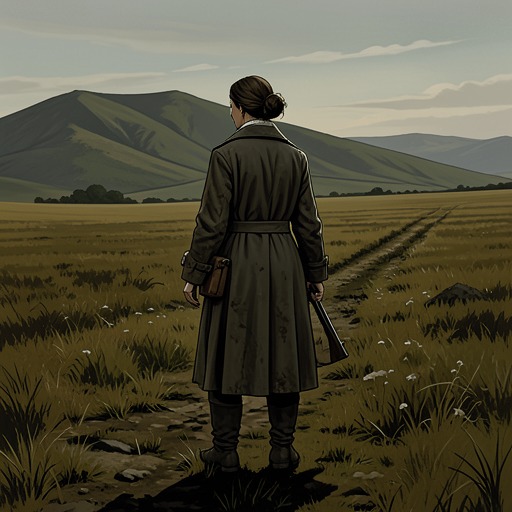
Tess resolves that her new life will contain no more d’Urberville fantasies. She intends to be only a dairymaid, and her mother understands this wish well enough not to bring up the family’s knightly ancestry. The decision is a deliberate refusal of a grand identity that has already proved damaging: instead of treating noble descent as a path to advancement, Tess seeks to make her working life independent of it.
Yet the refusal is not uncomplicated. Talbothays lies near former d’Urberville estates and the ancestral tombs, and this proximity attracts her even as she distrusts the inheritance. At Kingsbere she sees the ancestors as useless and nearly hates them for the course her connection to their name has helped set in motion. She reminds herself that she has inherited her mother’s side as well as her father’s, and that her beauty comes from her mother, who was only a dairymaid. The contrast displaces aristocratic blood as the sole explanation of her identity: Tess locates part of herself in ordinary maternal descent and in the capacities of her own life.
Still, the ancestral country stirs hope as well as resentment. Tess wonders whether something good might come from being in the land of her forebears, and the narrative links this unexpected surge of youth to the renewed instinct for self-delight. Her attraction to the place does not mean that she has recovered faith in hereditary privilege. Rather, the old landscape lets her hold opposing impulses at once: to reject the ancestors’ claims over her and to imagine that a new beginning might emerge from the very ground associated with them.
The Name and Social Recognition
Tess’s sense of lineage also affects her understanding of Angel Clare’s interest in her. After worrying that he must consider her foolish, she thinks of revealing that the figures represented in Kingsbere Church are her own lineal forefathers. She distinguishes herself from the wealthy Trantridge family, whose d’Urberville identity she understands as a fabrication of money and ambition, and considers her own descent authentic. The distinction matters to her because she hopes Angel might respect the historical truth of her ancestry even if its people and estates are gone.
Before speaking, however, she asks the dairyman whether Angel respects old county families that have lost their money and land. His account suggests the opposite: Angel scorns inherited claims and jokes that a family’s past accomplishments leave its descendants with nothing more to do. He has also mocked Retty Priddle’s own old family background, contrasting it with his encouragement of a boy who has no established surname. Hearing this, Tess keeps silent about the d’Urberville vault and her descent. She begins to suspect that what has attracted Angel is precisely her apparent lack of traditional aristocratic identity, not the lineage she had considered offering as proof of worth.
Angel’s own position makes the contrast especially visible. In conversation with his father, he hears of a young squire called d’Urberville near Trantridge and asks whether he is one of the ancient line of Kingsbere, associated with the legend of the coach-and-four. His father answers that the original family disappeared decades earlier and that the contemporary family appears to have taken its name. Angel explains that he is politically skeptical about the virtue of old families while remaining, in a literary and historical sense, attached to them. The exchange separates the romance of ancestry from belief in hereditary entitlement: the name can fascinate as history even when it carries no moral authority.
Inheritance Without Protection
The contrast between genuine descent and social power becomes painfully concrete when Tess’s mother reproaches her for failing to secure marriage to Alec d’Urberville. She assumes that the apparent family connection and the time Tess spent with him should have produced a marriage, and laments that she had hoped something might come of the association for the family. Tess answers that she was a child when she left home and that no one had warned her of the danger men could pose. The exchange shows how poverty and gender shape the practical meaning of ancestry: the family’s hopes attach to a possible alliance, while Tess bears the consequences of an encounter she was not equipped to navigate.
The lineage offers no defense against the double standard that governs how Tess is judged. When Angel admits that she was more sinned against than sinning, he nevertheless treats forgiveness as insufficient to preserve their marriage. Later, at Flintcomb-Ash, Tess works in a harsh agricultural setting described as a starve-acre farm, where the absentee owner’s village is managed with the land. Her endurance there is not a privilege of noble descent but a response to material necessity. After Alec rides away, she recognizes the injustice of having been judged so harshly despite never intending to do wrong. Her reflection makes the distance between ancestral dignity and lived treatment unmistakable: the old name cannot compel fair judgment or relieve her labor.
Across these reversals, inherited identity remains powerful chiefly because society and Tess herself continue to invest it with meaning. The family’s former estates, the Kingsbere tombs, the disputed d’Urberville name, and Tess’s decision to become simply a dairymaid all test whether birth can determine a person’s value or future. The novel’s answer lies in the gap between prestige and protection: ancestry may shape a person’s self-conception and the hopes others place upon her, but it cannot undo the economic vulnerability and moral judgments that govern her life.